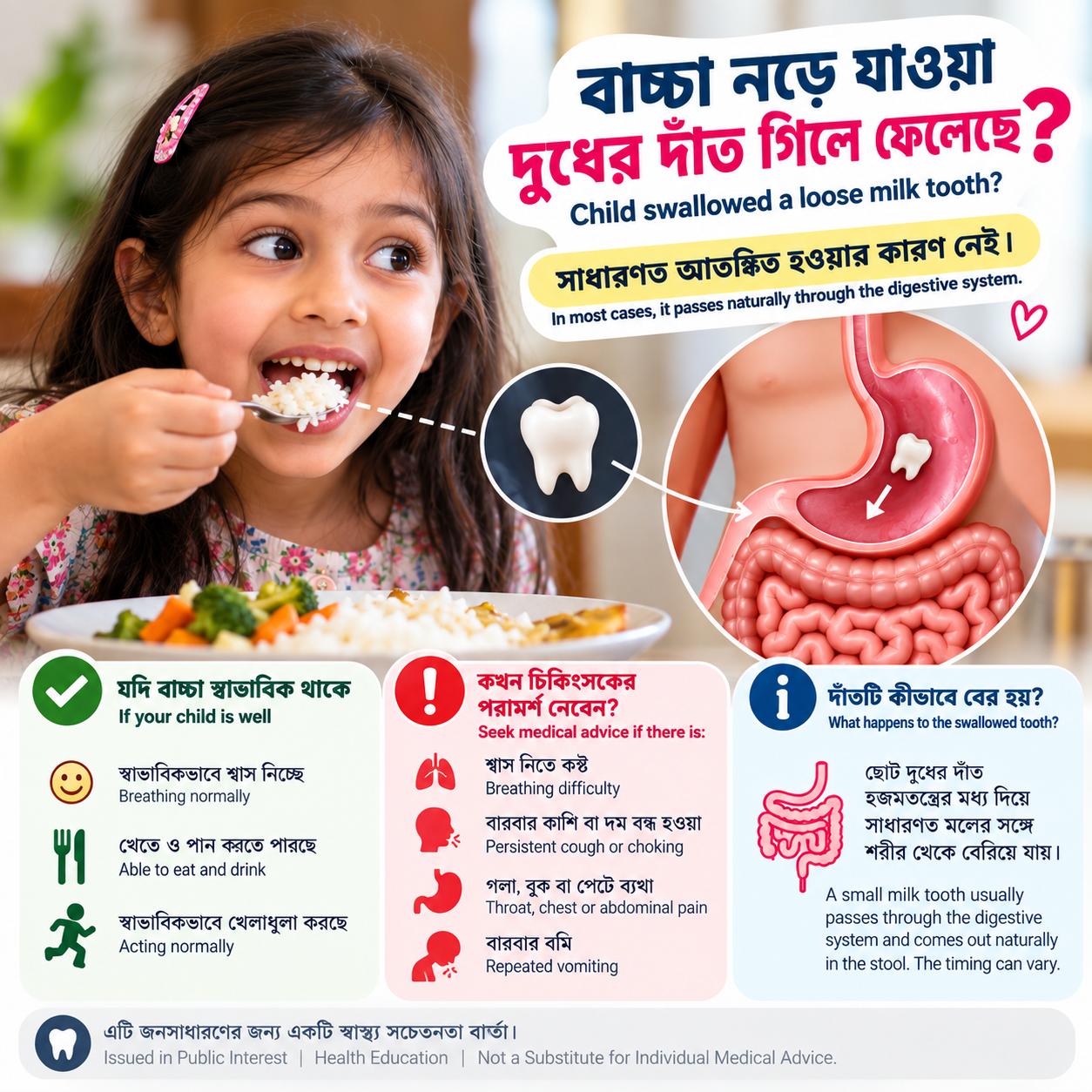
Child Swallowed a Loose Milk Tooth: What Should Parents Do?
বাচ্চা নড়ে যাওয়া দুধের দাঁত গিলে ফেললে কী করবেন?
A loose baby tooth (milk tooth) can sometimes come out while a child is eating and may be swallowed accidentally. For a small blunt tooth, the important first step is to check the child's breathing and overall condition.
খাওয়ার সময় নড়ে যাওয়া দুধের দাঁত খুলে গিয়ে বাচ্চা ভুল করে গিলে ফেলতে পারে। ছোট ও ভোঁতা দাঁত গিলে ফেললে প্রথমে বাচ্চার শ্বাস-প্রশ্বাস এবং সামগ্রিক অবস্থার দিকে নজর দেওয়াই গুরুত্বপূর্ণ।
Is it dangerous if a child swallows a milk tooth?
A small loose milk tooth that has been swallowed is usually not harmful when the child has no choking, breathing difficulty, swallowing difficulty or significant pain. Most small swallowed objects that reach the digestive tract pass naturally.
বাচ্চার দম বন্ধ হওয়া, শ্বাস নিতে কষ্ট, গিলতে অসুবিধা বা উল্লেখযোগ্য ব্যথা না থাকলে ছোট নড়ে যাওয়া দুধের দাঁত গিলে ফেলা সাধারণত ক্ষতিকর হয় না। পরিপাকতন্ত্রে পৌঁছানো ছোট বস্তু সাধারণত স্বাভাবিকভাবেই বেরিয়ে যায়।
What should parents do?
- Stay calm and observe the child.
- Check that the child is breathing normally.
- Check for persistent coughing, choking, wheezing or noisy breathing.
- If the child is comfortable and can swallow normally, continue normal food and fluids as tolerated.
- Do not try to make the child vomit.
- Do not assume that every swallowed object is safe; batteries, magnets, large or sharp objects require urgent medical assessment.
বাংলায়: শান্ত থাকুন, শ্বাস-প্রশ্বাস লক্ষ্য করুন, বারবার কাশি/দম বন্ধ হওয়া/শ্বাসে অস্বাভাবিক শব্দ আছে কি না দেখুন এবং বাচ্চা স্বাভাবিকভাবে গিলতে পারলে স্বাভাবিক খাবার-পানীয় দিতে পারেন। বমি করানোর চেষ্টা করবেন না।
When should a child get medical attention?
Seek urgent medical assessment if the child has difficulty breathing, choking, persistent cough, wheezing or noisy breathing, cannot swallow normally, develops significant chest/neck/abdominal pain, repeated vomiting, blood in vomit or stool, marked drooling, or becomes unusually sleepy or unwell.
দ্রুত চিকিৎসার পরামর্শ নিন যদি বাচ্চার শ্বাস নিতে কষ্ট হয়, দম বন্ধ হয়, বারবার কাশি/শ্বাসে অস্বাভাবিক শব্দ হয়, স্বাভাবিকভাবে গিলতে না পারে, গলা/বুক/পেটে উল্লেখযোগ্য ব্যথা হয়, বারবার বমি হয়, বমি বা মলে রক্ত থাকে, অতিরিক্ত লালা পড়ে বা বাচ্চা অস্বাভাবিকভাবে অসুস্থ/ঘুমঘুম হয়ে যায়।
Swallowed vs inhaled: why the difference matters
Swallowed means the object enters the digestive tract. Inhaled (aspirated) means it enters the airway. A tooth that has been inhaled can cause breathing problems and needs prompt assessment.
গিলে ফেলা মানে বস্তুটি খাদ্যনালির মাধ্যমে পরিপাকতন্ত্রে গেছে। শ্বাসনালিতে চলে যাওয়া আলাদা বিষয়। কাশি, দম বন্ধ হওয়া, wheezing বা noisy breathing থাকলে দ্রুত চিকিৎসা দরকার।
How long does a swallowed milk tooth take to pass?
There is no reliable fixed number of days for every child. Small swallowed objects commonly pass naturally through the digestive tract, but the timing varies. Routine stool checking is generally not necessary for a small harmless object unless a clinician advises it.
কত দিনে দাঁতটি বের হবে তার নির্দিষ্ট সময় বলা যায় না। ছোট গিলে ফেলা বস্তু সাধারণত স্বাভাবিকভাবে পরিপাকতন্ত্র দিয়ে বেরিয়ে যায়, তবে সময় ব্যক্তি ভেদে পরিবর্তিত হয়। চিকিৎসক আলাদা করে না বললে সাধারণত মল খুঁজে দাঁত বের করার প্রয়োজন হয় না।
Does my child need an X-ray?
Not every swallowed small blunt object needs an X-ray. The decision depends on what was swallowed, whether the object is likely to be visible on imaging, where it may be located, and whether the child has symptoms. A healthcare professional should decide when examination or imaging is appropriate.
প্রতিটি ছোট ভোঁতা বস্তু গিলে ফেললে X-ray দরকার হয় না। কী গিলে ফেলেছে, কোথায় থাকতে পারে এবং কোনো উপসর্গ আছে কি না—এসবের ওপর সিদ্ধান্ত নির্ভর করে। প্রয়োজনে চিকিৎসক পরীক্ষা বা imaging-এর পরামর্শ দেবেন।
Frequently Asked Questions
What should I do if my child swallowed a loose milk tooth?
If the child is breathing normally, can swallow normally and has no concerning symptoms, stay calm and observe. A small blunt tooth that has reached the digestive tract will usually pass naturally.
বাচ্চা স্বাভাবিকভাবে শ্বাস নিচ্ছে ও গিলতে পারছে এবং কোনো অস্বাভাবিক উপসর্গ নেই হলে শান্ত থাকুন ও লক্ষ্য রাখুন।
Is it dangerous if my child swallowed a baby tooth?
Usually not, when the tooth is small and blunt and the child has no choking, breathing or swallowing problems. Symptoms and the circumstances of the event matter.
Can a swallowed milk tooth get stuck?
Most small blunt swallowed objects pass through the digestive tract. Difficulty swallowing, drooling, persistent vomiting, significant pain or breathing symptoms need medical assessment.
How long does a swallowed milk tooth take to pass?
There is no fixed time for every child. Small swallowed objects commonly pass naturally, and the timing varies.
How can I tell whether the tooth was swallowed or inhaled?
Breathing difficulty, choking, persistent cough, wheezing or noisy breathing can indicate an airway problem and should be assessed promptly.
বাচ্চা দুধের দাঁত গিলে ফেললে কী করবেন?
যদি বাচ্চা স্বাভাবিকভাবে শ্বাস নিতে পারে, গিলতে পারে এবং কোনো অস্বাভাবিক উপসর্গ না থাকে, তাহলে শান্ত থাকুন ও লক্ষ্য রাখুন। সমস্যা হলে চিকিৎসকের পরামর্শ নিন।
Key takeaways for parents
- A swallowed loose milk tooth is usually not an emergency when the child is completely well.
- Breathing and choking symptoms are more important than trying to locate the tooth immediately.
- Do not make the child vomit.
- Seek prompt medical assessment for breathing, swallowing, significant pain, repeated vomiting or other concerning symptoms.
- Battery, magnet, large or sharp-object ingestion is a different and potentially urgent situation.
Medical information sources
This patient-education page is based on general guidance about swallowed foreign objects in children from established healthcare sources. The circumstances of an individual child can differ, so symptoms and the type of object matter.