When a “Simple” Toothache Becomes a Dental Emergency
Tooth pain is one of the most common reasons people seek dental care. Many patients initially look for quick toothache relief, assuming the problem will settle on its own. However, in certain situations, a “simple” toothache can progress into a dental emergency if left untreated.
Understanding when dental pain is routine — and when it is a warning sign — can prevent serious complications and protect overall health.
Local Clinical Perspective from a Dentist in Jalpaiguri
As a dental surgeon practicing in Jalpaiguri, I regularly see patients who delay treatment because the pain initially feels manageable. Many search online for a dentist in Jalpaiguri or a dental clinic in Jalpaiguri only after symptoms worsen.
At SMILE Dental Clinic, we often manage cases where early dental intervention could have prevented escalation into a true emergency. This is why public awareness plays such an important role in modern dentistry.
Toothache and Dental Emergencies: Knowing the Difference
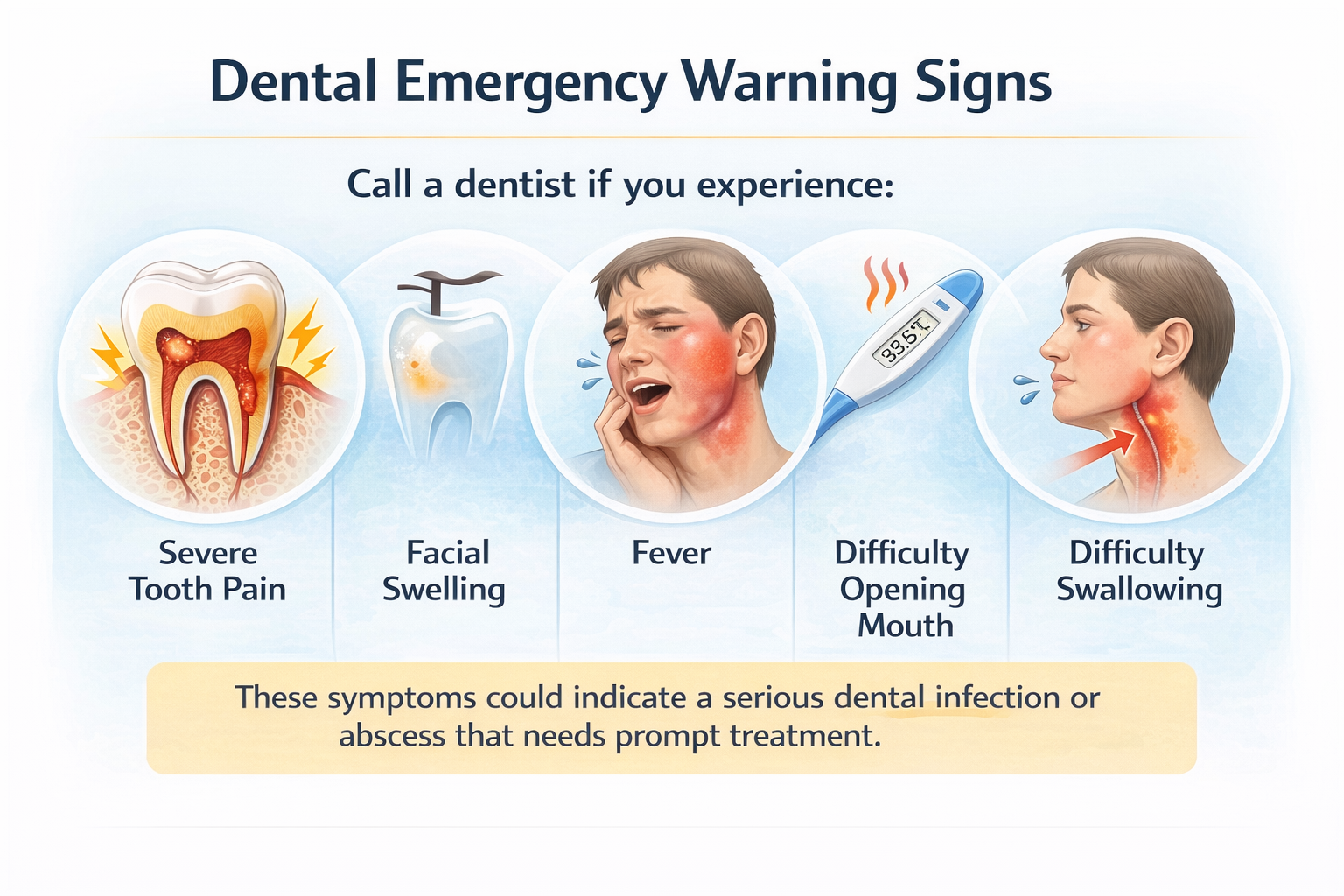
Not every toothache is dangerous, but certain signs should never be ignored. A toothache emergency in Jalpaiguri often presents differently from routine dental pain.
Common dental emergency signs include:- Persistent or worsening pain
- Facial or jaw swelling
- Fever or general weakness
- Difficulty opening the mouth
- Pain while swallowing
When these symptoms appear, delaying care increases risk. This is when consulting an emergency dentist in Jalpaiguri or searching for an emergency dentist near me in Jalpaiguri becomes necessary.
Swelling, Abscess, and Spread of Dental Infections
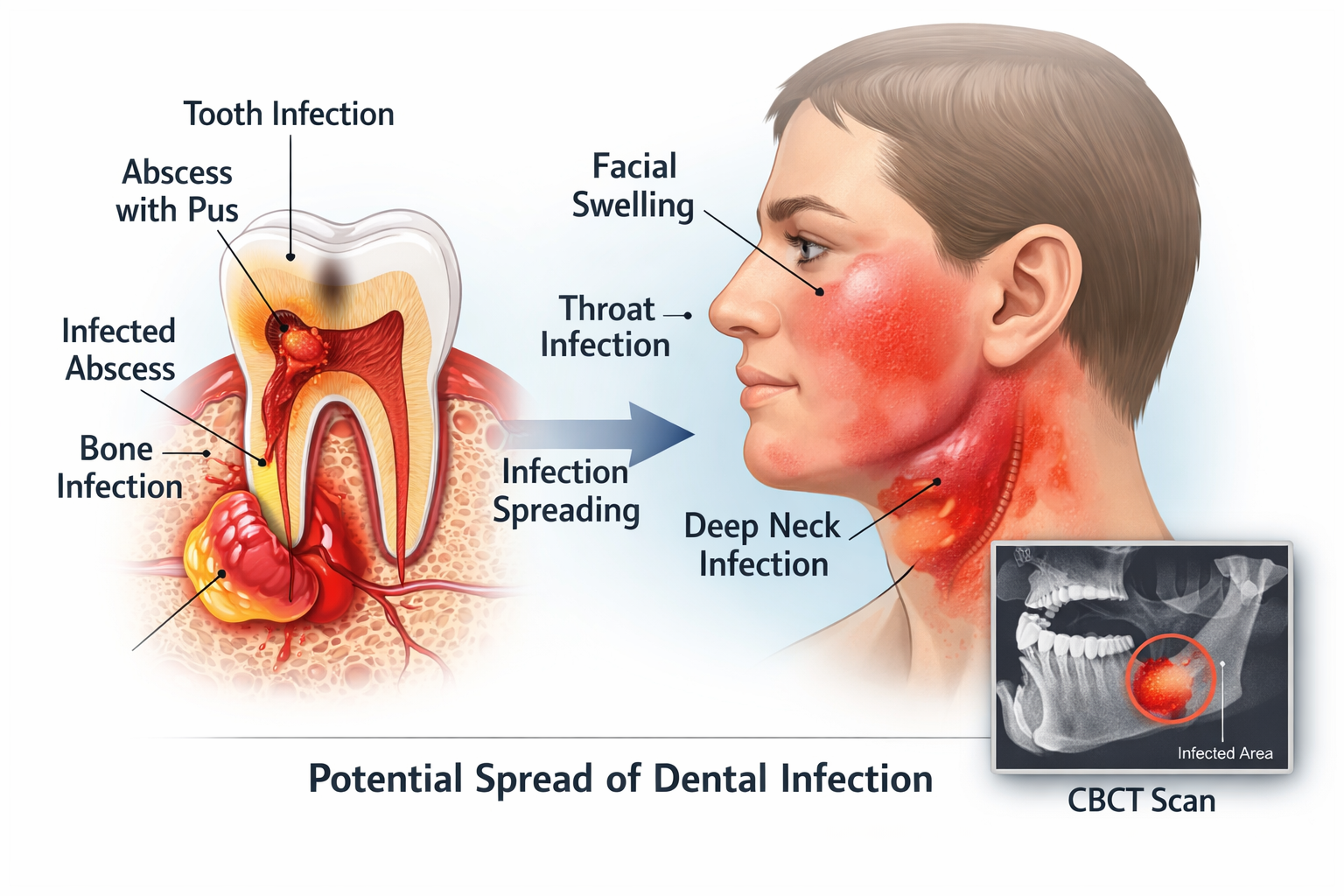
One of the most concerning presentations is swollen face tooth pain, which may indicate the presence of an abscess. Dental abscesses are usually the result of odontogenic infections, meaning infections that originate from teeth or surrounding tissues.
In advanced cases, timely care from an abscess drainage dentist in Jalpaiguri becomes critical. Without treatment, dental infections may spread along facial planes and neck spaces, increasing the risk of deep neck infections.
Preventing neck abscesses begins with:
- Early diagnosis
- Prompt infection control
- Proper dental treatment planning
Severe Infections: Rare but Serious Complications
In rare situations, untreated dental infections can progress into serious medical conditions such as Ludwig’s angina, a rapidly spreading infection of the floor of the mouth and neck spaces.
While uncommon, this progression explains how a toothache can lead to ICU admission in extreme cases. It is important to stress that such outcomes are preventable with early dental care. The goal of awareness is not to create fear, but to encourage timely evaluation before complications arise.
Diagnosis and the Role of Dental Imaging
Accurate diagnosis is essential in managing dental emergencies. In certain cases, CBCT dental imaging provides valuable three-dimensional information about bone, infection spread, and anatomical structures.
CBCT is typically indicated when:
- Infection extent is unclear
- Swelling is disproportionate to visible dental findings
- Surgical planning is required
Emergency Dental Treatments and Preventive Care Options
Once the diagnosis is established, appropriate treatment is planned based on severity. Common emergency and preventive dental treatments include:
- Root canal treatment for infected teeth
- Root canal emergency care in Jalpaiguri when pain or swelling is acute
- Dental implants for long-term tooth replacement after infection control
- Teeth cleaning and scaling to prevent periodontal infections
- Teeth whitening as part of elective cosmetic care
- Dental checkups to detect problems before they escalate
What Is Pain — And Why Tooth Pain Can Be So Intense
Pain is a complex sensory and emotional experience that alerts the body to injury or dysfunction. Tooth pain is commonly classified as nociceptive pain, arising from stimulation of pain receptors within the dental pulp or surrounding periodontal tissues.
One reason dental pain can feel particularly intense is the unique anatomy of the dental pulp. The pulp is enclosed within a rigid structure, leaving very little room for expansion. When inflammation develops inside this confined space, pressure increases rapidly, resulting in strong pain signals.
Scientific Context: Research-Based Evidence
Clinical research consistently shows that acute dental pain is often reported at high intensity levels on validated pain scales.
"The dental pulp contains both A-delta fibers and C-fibers, which are responsible for transmitting sharp, fast, and high-intensity pain signals." — Niv et al., 2006 (Journal of Dental Research)
"Clinical studies assessing acute dental conditions such as irreversible pulpitis and dental abscesses have shown that patients frequently report pain scores in the higher range (8–10) on tools like the Visual Analogue Scale (VAS)." — Aggarwal et al., 2013 (International Journal of Oral Science)
Interpreting Pain Comparisons in a Clinical Context
Different types of pain — such as labor pain, bone fractures, or renal colic — arise from different tissues and neurological pathways. However, research indicates that pain from pulpal inflammation often reaches severe intensity levels.
In clinical practice, dental pain is widely regarded as one of the more intense forms of acute pain, particularly because of:
- The dense nerve supply of the dental pulp
- The confined anatomical space of the tooth
- The proximity of dental nerves to major sensory pathways
Accessing Emergency Dental Care in Jalpaiguri
Dental emergencies do not always follow office hours. Patients often search for 24 hour dentist near me in Jalpaiguri or late night dental clinic in Jalpaiguri.
While availability varies, the key message is knowing when to seek professional help. Seeking Emergency dental care at SMILE Dental Clinic ensures you receive an accurate diagnosis and treatment plan to prevent the spread of infection.
Conclusion: Awareness, Responsibility, and Early Care
A toothache should never be ignored simply because it seems minor. Awareness of dental emergency signs, timely consultation, and preventive care are the most reliable ways to avoid serious complications.
Early dental attention protects not only teeth, but overall health. Responsible decision-making and regular dental visits remain the cornerstone of safe, long-term oral care.
Clinical perspective by Dr. Sudip Roy
Dental Surgeon, Jalpaiguri