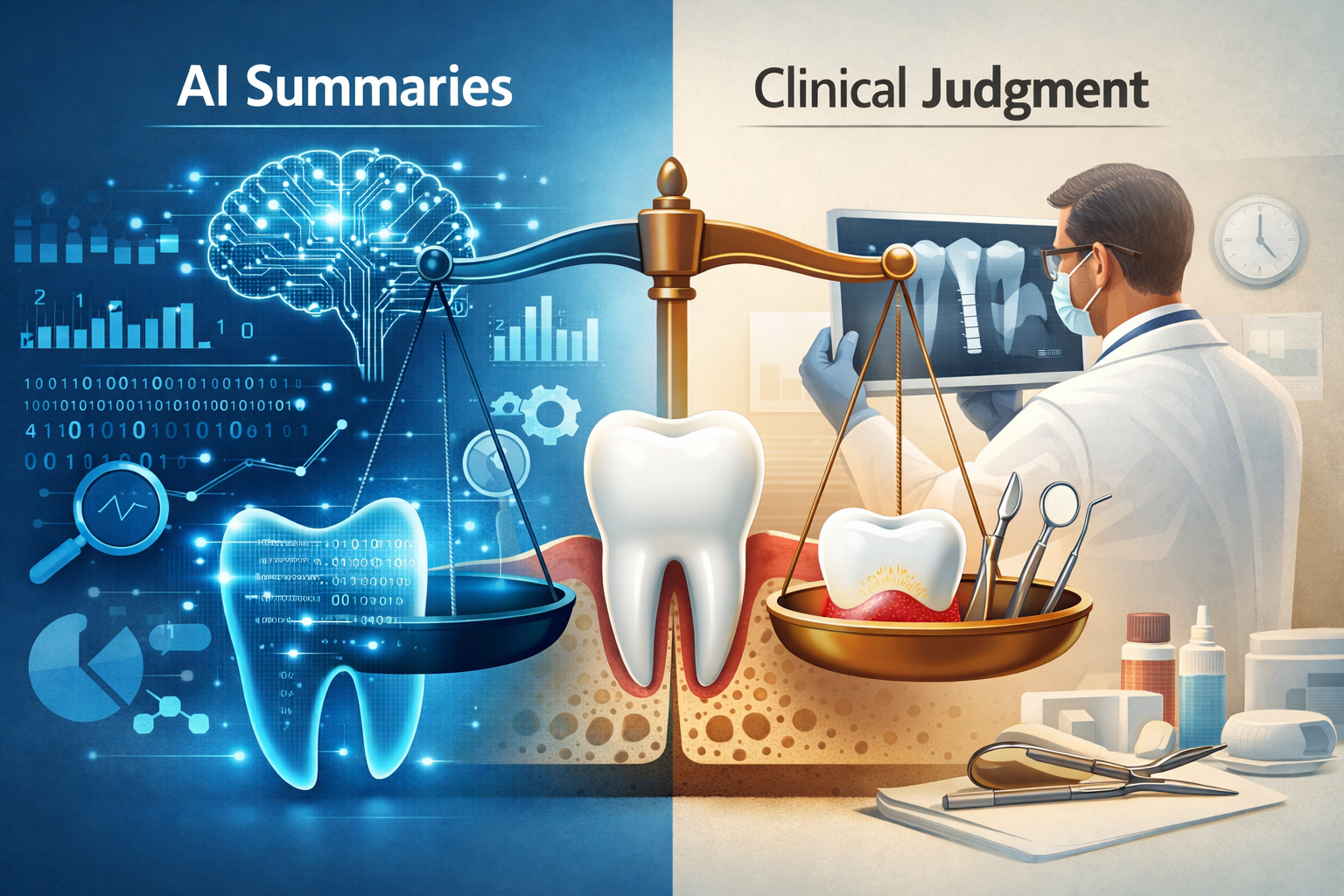
Over the last year, something fundamental has changed in how patients receive dental health information.
Google’s AI-powered summaries now answer questions instantly:
“Is a dental implant safe?”
“Does root canal weaken teeth?”
“Can gaps be closed without braces?”
While this appears helpful, it raises a critical question: Can artificial intelligence truly understand human biology?
What Google AI Does Well — And Where It Stops
AI systems are exceptional at summarising published information. They can scan thousands of research papers, guidelines, and clinical articles in seconds.
But dentistry is not mathematics. It is not a fixed formula. It is living biology.
AI can summarise research papers.
But it cannot feel bone density, inflammation, pain response, healing capacity, or patient anxiety.
Why Clinical Judgment Cannot Be Automated
In real dental practice, two patients with identical X-rays may require completely different treatments.
Bone quality, systemic health, age, habits, stress levels, and healing response all matter. No AI overview can replace hands-on clinical evaluation.
- Dental implant planning
- Root canal prognosis
- Smile design decisions
- Long-term restorative dentistry
The Risk of Oversimplified Medical Advice
AI answers compress complex medical decisions into short summaries. This can unintentionally encourage rushed or unnecessary treatments.
Let biology decide the speed — not algorithms or marketing timelines.
Why Evidence-Based Dentistry Matters More Than Ever
Evidence-based dentistry combines scientific research, clinical experience, and individual patient needs.
AI can assist with the first. Only an experienced clinician can responsibly integrate the other two.
A Message to Patients Reading AI Summaries
Use AI as a starting point — not a diagnosis. Seek experienced clinicians. The best dental decisions are made in the clinic, not in search results.